

 Posted on Google
 George Rone
Trustindex verifies that the original source of the review is Google.
I received great care for my shoulder here. The staff was extremely kind and welcoming!Posted on Google Lena ChachankoDr. Maribel and Jordan were great at explaining and making me comfortable. The laser was great and helped me relax. It is a good environment, I’d definitely recommend this place!Posted on Google
 Devin SainDr. Maribel she did a wonderful job working on me my first day coming here my pain dropped a lot getting helped from her. I was at 8 pain level and it dropped to a 2 she did some needle work on my lower back Area it felt really good So I recommend it if you have lower back pain and also she used tape on my lower back it feels really good. Overall I highly recommended her Dr. Maribel 10 out of 10 my first day coming in I felt really comfortable getting helped here in this areaPosted on Google
 Ann HollenbergerI have been coming to physical therapy since June. Dr. Maribel is wonderful, caring & has helped me a lot with my pelvic therapy. Jordan is the best! She’s very personable, kind , and always smiling! Love them. ❤️❤️Posted on Google
 John ReillyI'm about six weeks post major surgery for a condition called Neurogenic Thoracic Outlet Syndrome. It's basically nerve crush due to whip-lash, repetitive stress etc. I'm feeling very lucky that I have Dr. Maribel and Chesterton Physical Therapy helping me with my recovery. Mine is a long road back and their team has been helping me every step of the way. E-stim, laser, ultrasound, heat/ice, and dry-needling have all been used to help my muscles calm down and respond to treatment. The exercises they've implemented for me thus far are creative and perfectly matched to where I am in my recovery. The team is incredible - Alex, Adam, Neal, Jordan, Lucy, Sir John etc. - everyone is friendly, caring and genuinely wants to help you. Dr. Maribel oversees it all and designs customized treatment plans to get you where you need to go. She runs a tight ship and has hired a great staff. I have many sessions more to go and look forward to each one. Highly recommend!Posted on Google
 Peggy ArnettJacob, Dr Maribel, Adam is really outstanding. They will push you to work harder. Highly recommend CPT!!!Posted on Google
 Lexi PedeDr. Maribel and Jordan are fantastic :) thank you so much for your help!Posted on Google
 Desirae ThompsonAll of the staff is very welcoming, they are like a big family and care for both the staff and patients. I see Dr. Maribel, she really tries to pinpoint what you need help with by asking many questions, which if you’re very anxious like me and don’t know how to talk to people helps tremendously.Posted on Google
 Jackie GonzalezAll personal very friendly and professional, a great place for physical therapy, Dr Maribel Bacalan very nice, and tech Miss Jordan very helpful and friendly and john friendlyPosted on Google
 Rafael MoraMy experience with Dr. Neil and the whole team was great. Everyone I met was very friendly and supportive! Overall great experience and helped alleviate my pain tremendously!Verified by TrustindexTrustindex verified badge is the Universal Symbol of Trust. Only the greatest companies can get the verified badge who has a review score above 4.5, based on customer reviews over the past 12 months. Read more
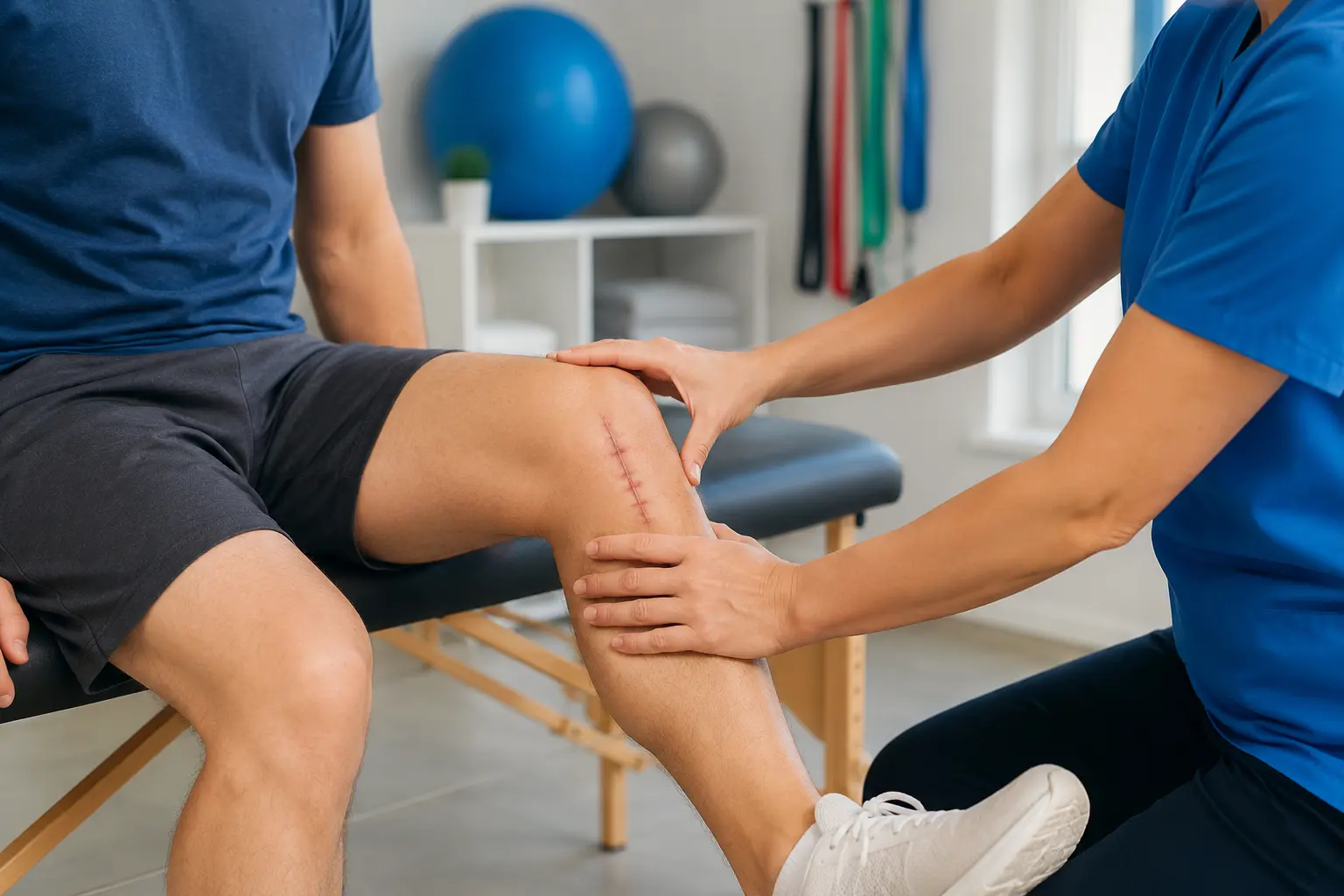
What to Expect at Your First Physical Therapy Visit After Knee Surgery
Recovering from knee surgery can bring relief, questions, and uncertainty. Physical therapy after knee surgery can play an important role in your recovery, but you may still wonder when you will start moving normally again, what exercises are safe, or what will happen at your first therapy appointment.
Physical therapy after knee surgery is an important part of many patients’ recovery plans. Your first visit is not about expecting you to perform difficult exercises right away. Instead, your physical therapist will learn about your surgery, evaluate your current condition, and develop a treatment plan based on your individual needs.
At Chesterton Physical Therapy, the goal is to help patients understand their recovery process and work toward improved movement, strength, and everyday function with appropriate professional guidance.
Why Physical Therapy After Knee Surgery Is Important
Knee surgery can affect how you walk, move, balance, and use the muscles around your knee. Even when surgery addresses the original problem, the muscles and joints may need time and guided rehabilitation to regain function.
Physical therapy may help you:
- Improve knee movement and flexibility
- Improve the strength and stability of the muscles around your knee
- Improve walking and balance
- Reduce stiffness and improve functional movement
- Learn safe exercises for your stage of recovery
- Gradually return to everyday activities
Your physical therapist will adjust your program based on your surgery, symptoms, medical history, and instructions from your healthcare team.
What Happens Before Your First PT Appointment?
A little preparation can make your first PT appointment after surgery easier and more comfortable.
Depending on your situation, consider bringing:
- Your doctor’s referral or post-surgery instructions, if applicable
- Insurance information
- A list of medications you currently take
- Comfortable, loose-fitting clothing
- Crutches, a walker, brace, or other assistive devices you have been instructed to use
- Any questions or concerns about your recovery
It can also be helpful to know the date and type of surgery you had and any restrictions your surgeon provided.
You do not need to be in perfect physical condition before your appointment. The evaluation is designed to understand where you are starting from.
What Happens at Your First Physical Therapy Appointment?
Your first visit will usually begin with a conversation and evaluation. The exact process can vary depending on your surgery and individual needs.
Discussion About Your Surgery and Recovery
Your physical therapist may ask questions about:
- What type of knee surgery you had
- When your surgery took place
- How your recovery has been going
- Your current pain or discomfort
- Any swelling or stiffness
- Activities that are difficult right now
- Your personal recovery goals
- Instructions or restrictions provided by your surgeon
This information helps your therapist understand your condition and determine which activities and treatments are appropriate.
Evaluation of Pain, Swelling, and Mobility
Your therapist may assess your knee and the surrounding area to understand how surgery has affected your movement and function.
They may look at your level of discomfort, swelling, stiffness, and how easily you can perform certain movements.
You should communicate honestly about what you are feeling. Let your therapist know if a movement causes discomfort or if you have concerns about a particular activity.
Range of Motion and Strength Testing
Knee range of motion is an important part of rehabilitation. Your therapist may gently evaluate how far you can bend or straighten your knee.
They may also assess the strength of muscles around the knee and leg.
These measurements give your therapist a starting point and can help guide your rehabilitation program as you progress.
Walking and Movement Assessment
Your therapist may observe how you:
- Stand up and sit down
- Walk
- Maintain balance
- Put weight through the affected leg, when appropriate
- Use crutches, a walker, or another assistive device
The therapist may also provide guidance on using an assistive device safely if you have been instructed to use one.
Will You Start Exercises During Your First Visit?
You may begin exercises during your first appointment, but this depends on your condition, the type of surgery you had, your current abilities, and your surgeon’s instructions.
Your therapist may introduce gentle movements or exercises that are appropriate for your stage of recovery.
Post-op knee PT is not a one-size-fits-all program. Some patients may begin with simple range-of-motion or muscle-activation exercises, while others may need a more gradual approach.
You may also receive exercises to perform at home between appointments. Your therapist should explain how to perform them safely and how often to complete them.
Understanding Your Knee Replacement Recovery Timeline
If you had a knee replacement, you may be searching for a knee replacement recovery timeline to understand when you will feel normal again.
The important thing to remember is that recovery does not follow exactly the same schedule for everyone.
Progress can depend on factors such as:
- The type of surgery
- Your overall health and fitness
- Your strength before surgery
- Your age and activity level
- Your response to rehabilitation
- Any other medical conditions
- Your surgeon’s instructions
- How consistently you follow your rehabilitation program
Instead of comparing your recovery with someone else’s, focus on the progress you are making according to your healthcare team’s guidance.
Your physical therapist can help you understand what goals are appropriate for your current stage of recovery.
Questions to Ask During Your First PT Appointment After Surgery
Your first appointment is also an opportunity to ask questions. Consider asking:
- What activities should I avoid right now?
- How often should I attend physical therapy?
- What exercises can I safely do at home?
- How should I manage discomfort after therapy?
- How should I use my crutches or walker?
- What movements should I be careful with?
- How will we measure my progress?
- When might I be able to return to specific daily activities?
Do not hesitate to ask for clarification if you do not understand an exercise or instruction.
Tips to Prepare for a Successful First Physical Therapy Visit
A few simple steps can help you feel more prepared.
Wear comfortable clothing. Choose clothing that allows your therapist to access and observe your knee and leg comfortably.
Bring your medical information. Having your surgery details, medications, referral, and post-operative instructions available can help your therapist better understand your situation.
Be honest about your symptoms. Tell your therapist about pain, swelling, stiffness, difficulty walking, or anything else that concerns you.
Bring your assistive device. If you are using crutches, a walker, or a brace, bring it to your appointment when appropriate.
Write down your questions. It is easy to forget questions during an appointment. Making a short list beforehand can help.
Most importantly, remember that you do not have to arrive at your first appointment already knowing how to exercise or move perfectly. Your physical therapist is there to guide you.
When Should You Contact Your Healthcare Provider?
Follow the post-surgery instructions provided by your surgeon and healthcare team.
If you experience concerning symptoms, significant or unexpected changes, or symptoms that worry you, contact the appropriate healthcare provider promptly. Your surgeon or medical team can advise you about symptoms that require medical attention.
Your physical therapist can also help you understand when a symptom may require communication with your healthcare provider rather than simply adjusting your therapy activities.
Frequently Asked Questions
The timing depends on the type of surgery, your individual condition, and your surgeon’s recommendations. Some patients begin rehabilitation soon after surgery, while others may have different schedules. Follow the instructions provided by your healthcare team.
Comfortable, loose-fitting clothing is usually a good choice. Wear something that allows your therapist to access and observe your knee and leg during the evaluation.
Some exercises or movements may feel challenging or uncomfortable, but your therapist should work within the appropriate limits for your recovery. Tell your therapist if you experience significant or unexpected pain during an activity.
The frequency of appointments varies depending on your surgery, recovery needs, goals, and healthcare recommendations. Your physical therapist can create a schedule appropriate for your situation.
Your therapist may provide a home exercise program based on your condition and stage of recovery. Follow the exercises and instructions provided by your healthcare team rather than starting unfamiliar exercises on your own.
For more helpful information, see answers to common patient questions.
Start Your Recovery With Personalized Physical Therapy
Your first physical therapy appointment after knee surgery is an important opportunity to understand your current abilities and create a safe, individualized plan for moving forward.
With professional guidance, you can work on mobility, strength, balance, and functional movement while following the recommendations appropriate for your surgery and recovery.
If you are looking for physical therapy after knee surgery in Chesterton, Chesterton Physical Therapy can help you understand your rehabilitation options and develop a treatment approach based on your individual needs.
Disclaimer: This article is for educational purposes only and is not a substitute for a personalized medical or physical therapy evaluation. Exercises may not be appropriate for every person or condition. If you have severe, worsening, or concerning symptoms, seek appropriate medical care.