

 Posted on Google
 George Rone
Trustindex verifies that the original source of the review is Google.
I received great care for my shoulder here. The staff was extremely kind and welcoming!Posted on Google Lena ChachankoDr. Maribel and Jordan were great at explaining and making me comfortable. The laser was great and helped me relax. It is a good environment, I’d definitely recommend this place!Posted on Google
 Devin SainDr. Maribel she did a wonderful job working on me my first day coming here my pain dropped a lot getting helped from her. I was at 8 pain level and it dropped to a 2 she did some needle work on my lower back Area it felt really good So I recommend it if you have lower back pain and also she used tape on my lower back it feels really good. Overall I highly recommended her Dr. Maribel 10 out of 10 my first day coming in I felt really comfortable getting helped here in this areaPosted on Google
 Ann HollenbergerI have been coming to physical therapy since June. Dr. Maribel is wonderful, caring & has helped me a lot with my pelvic therapy. Jordan is the best! She’s very personable, kind , and always smiling! Love them. ❤️❤️Posted on Google
 John ReillyI'm about six weeks post major surgery for a condition called Neurogenic Thoracic Outlet Syndrome. It's basically nerve crush due to whip-lash, repetitive stress etc. I'm feeling very lucky that I have Dr. Maribel and Chesterton Physical Therapy helping me with my recovery. Mine is a long road back and their team has been helping me every step of the way. E-stim, laser, ultrasound, heat/ice, and dry-needling have all been used to help my muscles calm down and respond to treatment. The exercises they've implemented for me thus far are creative and perfectly matched to where I am in my recovery. The team is incredible - Alex, Adam, Neal, Jordan, Lucy, Sir John etc. - everyone is friendly, caring and genuinely wants to help you. Dr. Maribel oversees it all and designs customized treatment plans to get you where you need to go. She runs a tight ship and has hired a great staff. I have many sessions more to go and look forward to each one. Highly recommend!Posted on Google
 Peggy ArnettJacob, Dr Maribel, Adam is really outstanding. They will push you to work harder. Highly recommend CPT!!!Posted on Google
 Lexi PedeDr. Maribel and Jordan are fantastic :) thank you so much for your help!Posted on Google
 Desirae ThompsonAll of the staff is very welcoming, they are like a big family and care for both the staff and patients. I see Dr. Maribel, she really tries to pinpoint what you need help with by asking many questions, which if you’re very anxious like me and don’t know how to talk to people helps tremendously.Posted on Google
 Jackie GonzalezAll personal very friendly and professional, a great place for physical therapy, Dr Maribel Bacalan very nice, and tech Miss Jordan very helpful and friendly and john friendlyPosted on Google
 Rafael MoraMy experience with Dr. Neil and the whole team was great. Everyone I met was very friendly and supportive! Overall great experience and helped alleviate my pain tremendously!Verified by TrustindexTrustindex verified badge is the Universal Symbol of Trust. Only the greatest companies can get the verified badge who has a review score above 4.5, based on customer reviews over the past 12 months. Read more
Jaw pain can make everyday activities surprisingly difficult. Eating, speaking, yawning and even opening your mouth can become uncomfortable when the temporomandibular joint or the muscles around it are not functioning normally.
So, can physical therapy help?
Yes, physical therapy can be part of conservative treatment for many people with temporomandibular disorders (TMD). Physical therapy may focus on improving jaw movement, reducing muscle tension, addressing related neck or posture issues, and helping you develop strategies for managing symptoms. However, TMD can have different causes, so treatment should be based on an individual evaluation rather than a one-size-fits-all exercise routine. NIDCR recommends conservative approaches for TMD and notes that physical therapy, including manual therapy, may help improve function and relieve pain.
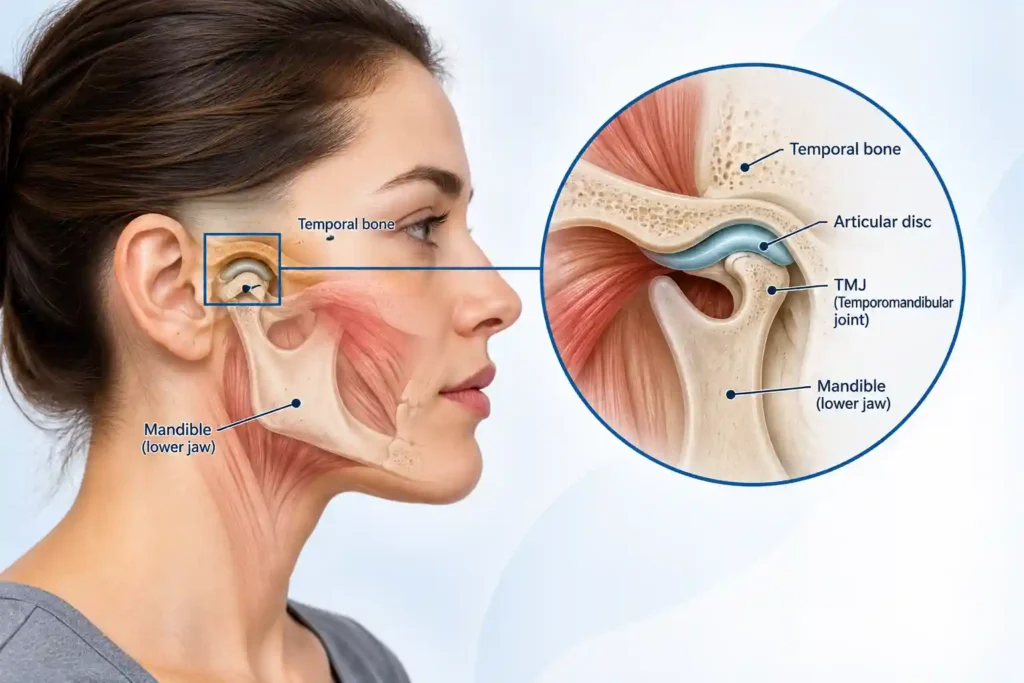
The temporomandibular joints, commonly called the TMJs, connect the lower jaw to the skull. You have one joint on each side of your face.
These joints work with muscles and other tissues whenever you chew, speak, swallow or open your mouth.
TMD, or temporomandibular disorders, is the broader term used for conditions that affect the jaw joints, chewing muscles and related structures. The TMJ refers specifically to the joint itself.
TMD is not a single condition. NIDCR describes more than 30 disorders involving the jaw joints, chewing muscles and related structures. Symptoms and causes can therefore vary considerably from one person to another.
People often use “TMJ” to describe jaw problems, but the terms technically mean different things:
Because “TMJ” is commonly used when people talk about jaw disorders, you may see terms such as TMJ physical therapy, TMD physical therapy, and physical therapy for TMJ dysfunction used when referring to treatment for these problems.
Symptoms can include:
Not every clicking or popping sound means that treatment is necessary. NIDCR notes that painless TMJ sounds are common and generally do not require treatment by themselves.
Physical therapy can be a useful conservative option for some people with TMD.
The goal is not simply to “strengthen the jaw.” Depending on your symptoms, physical therapy may focus on restoring comfortable movement, addressing muscle tension, improving coordination, and managing contributing factors involving the jaw, neck and surrounding areas.
Research has investigated manual therapy and therapeutic exercise for TMD. A systematic review found promising effects from manual therapy alone or combined with exercise, although the authors also emphasized limitations in the quality and consistency of the available evidence.
This is important because TMD is not the same for everyone. A treatment that makes sense for one person may not be appropriate for another.
Before recommending specific exercises or treatment techniques, a physical therapist may look at more than the jaw itself.
Your therapist may assess how comfortably you open and close your mouth and whether the jaw moves evenly.
They may also consider:
The goal is to understand how the jaw is moving and which activities reproduce your symptoms.
The muscles involved in chewing and jaw movement work together with surrounding structures.
A physical therapy evaluation may therefore consider muscle tension or tenderness around the jaw, face and neck.
The neck can also be relevant when evaluating someone with jaw symptoms.
Depending on the individual, a therapist may examine neck movement, upper-back mobility and posture as part of the overall assessment.
This does not mean that poor posture is the cause of every case of TMD. Rather, it recognizes that jaw and cervical musculoskeletal function can interact and may need to be considered together.
Your therapist may also ask about activities that make symptoms worse.
These can include:
Identifying these patterns can help create a practical treatment plan rather than focusing only on the painful area.
The exact approach depends on the person’s symptoms and evaluation.
Manual therapy uses hands-on techniques to address muscles and joints.
For TMD, this may include treatment directed toward the jaw and surrounding soft tissues or, when appropriate, related areas of the neck.
NIDCR notes that research suggests manual therapy may improve function and relieve pain in people with TMD.
Exercises may be used to improve controlled jaw movement, mobility or muscle coordination.
The important point is that more exercise is not automatically better.
Jaw exercises should be selected according to the person’s presentation. If an exercise increases pain or causes new symptoms, it should not simply be pushed through without professional guidance.
When neck movement or posture is relevant to a person’s symptoms, a physical therapist may incorporate exercises for the neck, upper back and surrounding muscles.
Research on physical therapy for TMD has examined jaw exercises, postural exercises and cervical interventions, although evidence quality varies between interventions and conditions.
A therapist may use soft-tissue techniques to address muscle tightness or tenderness around the jaw, face or neck.
These techniques are generally used as part of a broader treatment plan rather than as a stand-alone solution.
A successful rehabilitation plan often includes things you can do outside the clinic.
Your therapist may provide exercises, movement strategies or advice about habits that may be aggravating your symptoms.
This can help you understand your condition and participate actively in managing it.
Depending on the underlying problem and the individual’s response to treatment, physical therapy may help with:
Treatment may help reduce musculoskeletal pain around the jaw and associated areas.
Exercises and manual techniques may be used to improve comfortable jaw mobility and function.
Addressing overactive or tense muscles may help reduce discomfort and improve movement.
Some people may benefit from exercises designed to improve controlled jaw movement.
Education can help identify behaviors or activities that may contribute to recurring symptoms, such as excessive chewing or jaw clenching.
The goal is not simply temporary symptom relief. A good rehabilitation plan should also help you understand how to manage your symptoms and safely return to normal activities.
Sometimes, but it depends on the person and the type of TMD.
Some TMD symptoms may improve with conservative care and self-management. NIDCR notes that many TMD problems are temporary and may resolve without treatment, while conservative approaches such as exercises, self-management and physical therapy can be considered when appropriate.
Physical therapy also does not replace dental or medical evaluation when another condition may be causing the symptoms.
For example, persistent jaw locking, significant trauma, unexplained swelling or symptoms that may have another medical or dental cause should be evaluated appropriately.
In some cases, physical therapists, dentists and physicians may work together as part of a patient’s care.
Simple self-management strategies may be appropriate for some people with TMD.
NIDCR recommends conservative measures such as temporarily choosing softer foods, using heat or cold with appropriate exercises, and reducing habits such as gum chewing and jaw clenching.
Depending on your symptoms, useful strategies may include:
Be cautious about copying random TMJ exercises from the internet. A particular exercise may not be appropriate for every type of TMD.
Physical therapy can be useful for musculoskeletal TMD, but jaw and facial symptoms can have different causes.
Consider professional evaluation if you have:
NIDCR notes that diagnosing TMD can be difficult because different conditions can produce overlapping symptoms. A healthcare professional may need to evaluate the jaw, face, neck and other possible causes before determining the appropriate treatment.
A typical treatment process begins with an evaluation.
Your physical therapist may discuss:
The therapist can then use the findings to develop an individualized plan.
Treatment may include manual therapy, therapeutic exercise, movement education and a home program when appropriate.
The plan may also change as your symptoms and movement improve.
The American Physical Therapy Association’s educational guidance on TMD emphasizes evaluation, treatment, and collaborative care as part of the physical therapist’s role in managing these conditions.
If you’re searching for physical therapy for TMJ near me, look beyond whether a clinic simply lists TMJ as a condition it treats.
Consider asking:
Chesterton Physical Therapy lists TMJ Dysfunction among the conditions it treats and provides physical therapy services in Chesterton, Michigan City, Portage and Valparaiso.
If you’re experiencing jaw pain or dysfunction, the next step is an appropriate evaluation rather than assuming that every TMJ problem requires the same treatment.
Yes. Physical therapy can be part of conservative TMD care and may focus on pain management, jaw mobility, muscle function and related neck or movement issues. The appropriate treatment depends on the type and cause of the symptoms.
Depending on the individual’s evaluation, treatment may include manual therapy, therapeutic jaw exercises, exercises for the neck and upper body, movement education and a home program.
It can for some people, but not every TMD responds in the same way. TMD includes many different conditions, so some patients may also need dental or medical evaluation or care.
Treatment should be appropriately matched to the person’s symptoms and tolerance. Your therapist can modify techniques or exercises if a particular movement aggravates your symptoms.
Jaw disorders can sometimes produce ear-area symptoms, but ear pain can also have other causes. Persistent or unexplained ear symptoms should be appropriately evaluated rather than automatically attributed to TMD.
Exercises vary depending on the individual’s condition. A physical therapist may prescribe controlled jaw movements, mobility exercises or exercises addressing the neck and posture when appropriate.
It depends on your symptoms and suspected cause. TMD can involve several different conditions, so dental, medical and physical therapy evaluation may all have a role in appropriate cases.
Look for a physical therapist who evaluates and treats TMD and is comfortable assessing the jaw and related head, neck and musculoskeletal factors. APTA’s patient guidance also recommends considering a therapist with experience managing TMD.
Physical therapy can be an important part of conservative care for TMJ dysfunction, particularly when treatment is tailored to the person’s symptoms and functional limitations.
Rather than focusing only on the jaw joint, a physical therapist may evaluate jaw movement, surrounding muscles, neck function, posture and everyday habits. Treatment may include manual therapy, therapeutic exercises, movement education and a home program.
The evidence supports conservative approaches to TMD, but it also shows why individualized care matters. TMD includes many different conditions, so there is no single exercise or treatment that works for everyone.
If jaw pain, stiffness or limited movement is interfering with eating, speaking, or everyday activities, consider getting an appropriate evaluation to determine whether physical therapy is a suitable part of your care.
Neck & Shoulder Pain Relief – No Meds. No Surgery.
Get expert tips and simple exercises to feel better — naturally and safely.
🔒 We respect your privacy. No spam, ever. 🤝
✅ Backed by certified experts at Chesterton Physical Therapy
💡 Trusted by 1,000+ patients in Chesterton, Portage & Michigan City